
Log Home Moisture Damage Repair Done Right

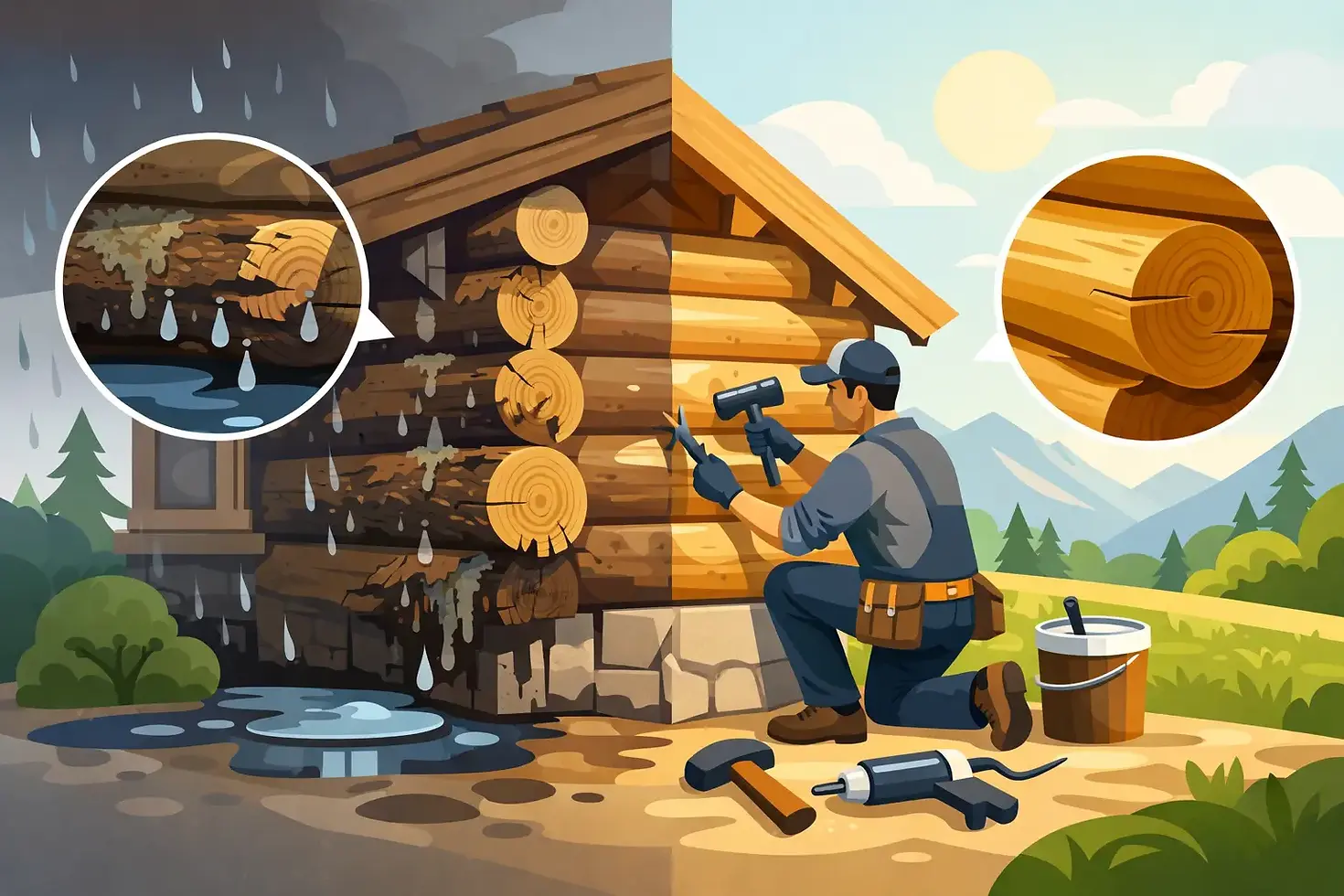
A dark stain below a window, soft wood at the end of a log, or chinking that has pulled away from the wall can be the first visible warning. Log home moisture damage repair is most successful when the source of water is found early, the affected wood is assessed honestly, and the repair is completed with the same care that went into building the home.
For Montana log homeowners, moisture is rarely a one-season concern. Snow can sit against lower logs, spring runoff can overwhelm poorly directed drainage, wind-driven rain can find a failed joint, and strong summer sun can wear down a protective finish. A log home is built to endure the elements, but its protection depends on details that deserve regular attention.
How Moisture Gets Into a Log Home
Logs do not usually fail because they get wet once. Damage begins when water repeatedly enters an opening and the wood cannot dry properly. The most common entry points are failed chinking or caulking, open checks, poorly sealed window and door openings, worn stain, roof leaks, and logs that sit too close to soil, decking, or landscaping.
Horizontal surfaces and exposed log ends deserve particular attention. Log ends absorb moisture more readily than the face of a log, while checks can direct water deep into the wood when they are oriented upward. A small gap around trim may look cosmetic from the outside, yet it can allow water behind the wall where deterioration continues out of sight.
Moisture problems also often start above the damaged area. A leaking roof valley, short overhang, clogged gutter, or missing flashing may send water down the wall for months before the log itself shows a clear symptom. Repairing only the visible rot without correcting that water path invites the same problem to return.
Signs You Need Log Home Moisture Damage Repair
Not every weathered area requires log replacement. Surface fading, light checking, and a finish that has begun to dull can often be addressed through proper preparation and refinishing. The concern rises when the wood has lost its soundness or when water is bypassing the home’s protective envelope.
Watch for wood that feels soft, spongy, or crumbly when gently probed. Dark streaking that remains after the surface dries, deep cracks with dark interiors, peeling stain, fungal growth, and insect activity can all point to a moisture issue. Inside the home, musty odors, discolored drywall or trim, drafts around openings, and unexplained changes in interior humidity deserve a closer look as well.
The location tells part of the story. Lower courses of logs, corners, window sills, door thresholds, and areas beneath roof transitions are frequent trouble spots. On a second home, these areas can deteriorate between visits, which makes a professional inspection especially valuable.
Start With the Water Source, Not the Rot
A durable repair begins with diagnosis. Before damaged wood is removed or a new coat of stain is applied, the contractor should identify how water is entering and why it is not draining or drying as intended.
That may involve checking roof lines and flashing, examining gutters and downspouts, reviewing grade around the foundation, inspecting chinking adhesion, and looking closely at window and door details. It also means checking adjoining logs. Rot often extends farther than the visibly damaged surface, particularly where water has traveled along a joint or behind trim.
This investigation is where homeowners can avoid false economy. Filling a soft area with patch material, coating over a failed finish, or adding sealant over wet wood may improve the appearance temporarily. It does not restore structural integrity or remove the conditions that caused the damage. The right scope depends on the depth of decay, the role of the log in the wall, and the condition of the surrounding assembly.
When a Log Can Be Restored and When It Must Be Replaced
If damage is limited to the surface and the log remains solid, restoration may include media blasting or careful surface preparation, treatment of the affected area, repair of checks and joints, and a compatible stain and protective finish. This approach preserves original material while rebuilding the home’s defense against water and UV exposure.
When rot has penetrated deeply, undermined a log end, or affected a structural portion of the wall, replacement is often the sounder choice. A proper damaged-log replacement is not simply a matter of inserting new wood into an opening. The replacement log should be selected and shaped to fit the existing wall, scribed where needed, properly sealed at vulnerable surfaces, and integrated with sound flashing, chinking, and finish work.
Stain matching matters, too. A replacement should protect the structure without looking like an afterthought. Wood species, age, sun exposure, and the condition of neighboring logs all affect the final color. Skilled preparation and careful stain matching help the repair blend naturally into the home while maintaining the protective finish the wall needs.
Chinking and Sealants Are Part of the Repair System
Chinking is not decoration between logs. It is a working weather barrier that helps manage air movement and water intrusion while allowing for the natural movement of a log structure. When it loses adhesion, cracks, or separates from the logs, moisture and drafts can find a direct path into the wall system.
A lasting repair requires more than applying new material over old failure. Loose or deteriorated material must be removed, the surfaces prepared correctly, and the joint built to accommodate movement. Premium products such as Log Jam chinking, applied over appropriate backing and sound preparation, provide the flexibility and adhesion a log wall requires.
Sealants around windows, doors, and log intersections deserve the same attention. These transitions move differently and often receive concentrated runoff. The correct product and joint design matter more than simply adding more caulk.
Protect the Repair With a Complete Exterior Plan
Once the damaged area is repaired, the next goal is to prevent a repeat. That usually calls for several coordinated measures rather than one product or treatment. The finish must be renewed where it has worn thin, open checks should be addressed when they can collect water, and the building’s drainage details should direct water away from the wall and foundation.
Keep soil, mulch, stored firewood, and vegetation from trapping moisture against lower logs. Trim shrubs so air can circulate and the wall can dry after rain or snow. Check that downspouts carry water well away from the house, and look for snow buildup that stays in contact with wood during thaw cycles.
Fire-protection treatments may also be appropriate for Montana properties, but they should be considered as part of a broader preservation plan. A home needs both wildfire awareness and dependable moisture management. One does not replace the other.
Why Annual Inspections Save More Than They Cost
Log homes reward early intervention. A small separation in chinking or a worn patch of finish is generally straightforward to address. Left alone, the same opening can lead to concealed moisture, rot repair, insect access, interior damage, and replacement of material that could have been preserved.
An annual inspection creates a practical record of the home’s condition. It is an opportunity to check the finish, log ends, joints, exposed corners, roof-to-wall transitions, drainage, and earlier repairs before seasonal weather compounds a minor concern. For owners who live out of state or split time between properties, that consistent oversight can provide real peace of mind.
Cash Creek Preservations approaches this work as stewardship, not a quick cosmetic fix. Clean work practices, direct owner involvement, proper preparation, and transparent recommendations help homeowners make decisions based on the actual condition of their home.
If you have noticed soft wood, dark staining, separated chinking, or persistent moisture near a log wall, do not wait for the next major weather event to test it. A Free Log Home Health Check can clarify what is happening, what needs attention now, and what can be planned before a small opening becomes a much larger repair.


Comments