
How to Clean Log Siding Without Damaging It

A log home can look weathered long before it is truly worn out. Pollen, road dust, cobwebs, smoke residue, and seasonal grime settle into the grain and darken the wood over time. Knowing how to clean log siding the right way restores its appearance without stripping protective stain, forcing water into checks, or creating the conditions for rot.
For Montana homeowners, cleaning is more than curb appeal. It is one of the simplest opportunities to inspect the exterior closely and catch failed chinking, open checks, peeling finish, insect activity, and moisture-prone areas before they become expensive repairs. The goal is not to make the logs look raw or newly milled. The goal is to leave them clean, protected, and ready for the next season.
Start With a Close Inspection
Before water or cleaner touches the siding, walk the home slowly. Pay particular attention to south- and west-facing walls, where UV exposure often breaks down stain first. Look under rooflines, around windows and doors, behind downspouts, near decks, and along the bottom courses of logs. These are common places for dirt to collect and moisture to linger.
A little surface dust is normal. Gray wood, dark staining that does not rinse away, soft spots, deep checking, peeling finish, or visible gaps in chinking are different matters. Cleaning will not correct failing coatings or water-damaged wood. In fact, aggressive washing can make those conditions worse by driving water into unprotected areas.
Also look for the source of the dirt. Overflowing gutters, splashback from roof runoff, irrigation overspray, a leaky hose bib, and shrubs pressed against the home can keep log siding wet. A proper cleaning is more effective when the moisture problem is addressed first.
Choose a Mild Cleaner and the Right Day
Most routine log siding cleaning calls for a mild, wood-safe exterior cleaner diluted according to its label. The product should be appropriate for stained wood and should not leave a residue that interferes with future maintenance coats. Avoid household bleach, harsh degreasers, and strong alkaline cleaners unless a log-home professional has recommended a specific product for a specific condition.
Bleach can brighten certain organic staining, but it can also discolor wood, damage surrounding vegetation, and leave the surface overly dry. It is rarely the best first answer for a log home. If mildew or algae is present, use a cleaner formulated to address it while remaining compatible with the existing finish.
Pick a cool, overcast day when possible. Direct sun can dry cleaner on the wall before it has time to work, leaving streaks or uneven results. Do not clean when freezing temperatures are expected before the logs can dry. The wood needs a fair stretch of dry weather afterward, especially if touch-up staining or caulking repairs are planned.
Protect nearby plants by wetting them before cleaning and rinsing them again afterward. Cover delicate landscaping only if the covering will not trap heat or damage the plants. Close windows, move outdoor furniture, and make sure electrical fixtures are protected from overspray.
How to Clean Log Siding Safely
Work in manageable sections, generally no wider than you can rinse before the cleaner dries. Begin by rinsing the logs with a garden hose using a gentle fan pattern. This removes loose dirt and cools the surface.
Apply the diluted cleaner from the bottom of the wall upward. Starting low helps prevent dirty runoff from creating streaks down a dry wall. Allow the product to dwell only as long as directed by the manufacturer. Do not let it dry on the siding.
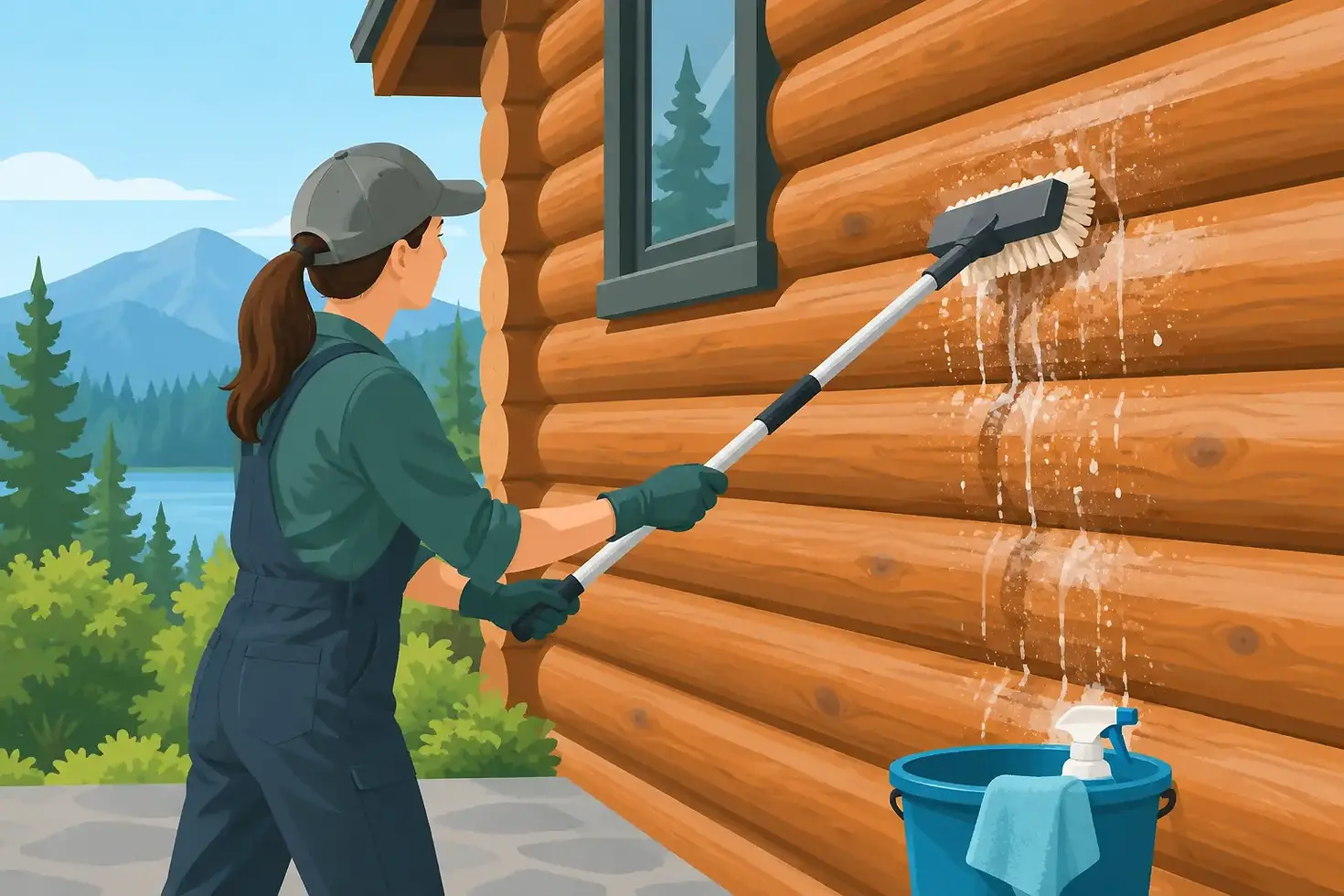
Use a soft-bristle brush with an extension handle for stubborn grime. Brush with the grain using light, even pressure. The purpose is to lift residue from the surface, not scour the wood. On textured or hand-hewn logs, a soft brush is often more effective than simply adding water pressure because it reaches into the natural contours without eroding the fibers.
Rinse from the top down with clean water. Keep the spray angled downward so water follows the natural path of rain rather than being driven up behind lap joints, into checks, or around windows. Continue rinsing until no cleaner remains.
A garden hose is sufficient for many annual cleanings. If you use a pressure washer, caution matters more than power. Keep pressure low, use a wide fan tip, stand well back from the wall, and test an inconspicuous area first. Never use a zero-degree tip, and do not aim the stream directly into log checks, chinking edges, window trim, or the horizontal seams between logs.
High-pressure washing can remove stain, roughen the wood, shred deteriorated chinking, and push water where it does not belong. Those problems may not be obvious until the finish begins failing or moisture damage appears later. When the siding is heavily grayed, coated with failing finish, or affected by widespread mildew, professional media blasting or restoration may be a better choice than turning up the pressure.
Treat Stains According to Their Cause
Not every dark mark on a log wall is mildew. Identifying the cause saves time and prevents unnecessary chemical use.
Black or green growth often appears on shaded walls, beneath eaves, and near vegetation where the logs stay damp. A wood-safe mildew cleaner may help, but recurring growth usually means the area needs better drainage, more airflow, or a repaired gutter.
Gray, faded wood is usually UV damage rather than dirt. Washing can remove surface grime, but it will not restore color or replace a worn protective finish. That wall may need a compatible maintenance coat after it has dried fully.
Dark streaks below fasteners can indicate metal staining. Rusting hardware, flashing issues, or water carrying minerals across the siding can create marks that ordinary soap will not remove. Use only a wood-appropriate stain treatment and test it first, because the wrong product can lighten the wood unevenly.
Sap, smoke residue, and insect marks each respond differently. When a stain does not improve with gentle cleaning, stop before escalating to stronger products. A professional assessment can determine whether the issue is superficial, finish-related, or evidence of moisture intrusion beneath the surface.
Let the Logs Dry Before Making Repairs
After washing, give the siding time to dry thoroughly. The exact drying time depends on temperature, humidity, wall exposure, and how much water was used. A protected north wall may dry much more slowly than a sunny wall. Do not rush to apply stain, sealant, or chinking over damp logs.
Once the wall is dry, inspect it again. Cleaning often reveals the real condition of the finish. If water no longer beads on the surface, the stain may be nearing the end of its service life. If you find open checks facing upward, failed caulking, separation around window trim, or cracked chinking, those areas should be repaired before the next wet season.
This is also the right time to check the lower logs for splashback and the top logs for roof leaks. A clean wall makes subtle changes in wood color and texture easier to see, which is why regular maintenance can prevent a small repair from becoming a log replacement project.
Make Cleaning Part of Annual Log Home Care
Most homes benefit from a light exterior cleaning and inspection once a year, typically after pollen season or before winter weather arrives. Homes beneath heavy tree cover, near gravel roads, or exposed to smoke and wind-driven dust may need attention more often. The schedule should follow the home’s exposure, not a fixed calendar rule.
Keep branches trimmed back from the siding, maintain gutters and downspouts, and avoid directing sprinklers toward the logs. These small habits reduce cleaning needs and protect the finish between service visits.
When cleaning reveals persistent staining, peeling finish, soft wood, or chinking that has pulled away from the logs, it is time for a closer evaluation. Cash Creek Preservations provides owner-led log home health checks to help homeowners understand what needs immediate attention and what can be planned as preventative maintenance. Careful cleaning is one of the best ways to keep your home’s natural beauty visible - and its next repair manageable.


Comments