
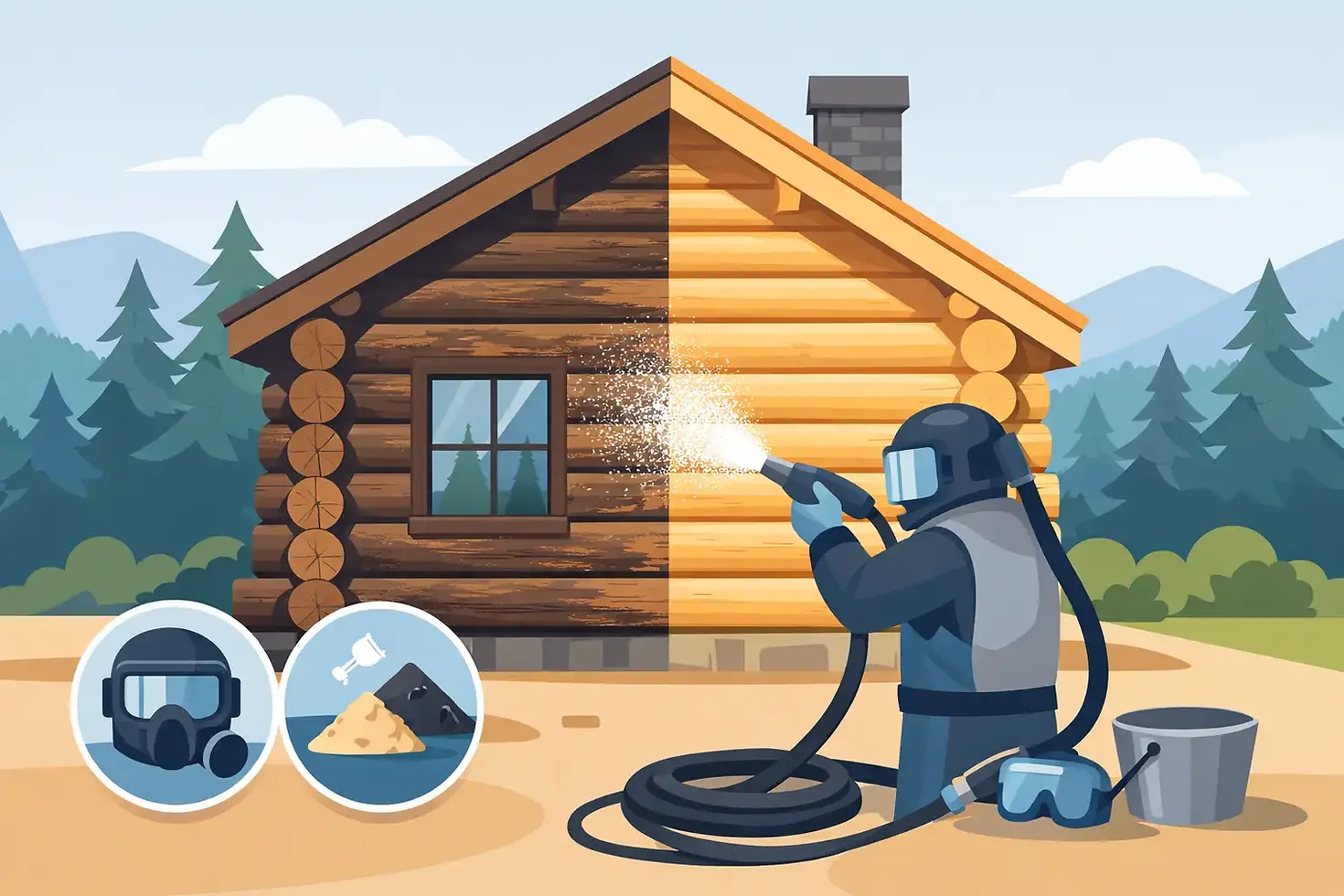
When Does Log Home Media Blasting Make Sense?

A log home can look tired long before the wood itself is beyond saving. Peeling stain, gray weathered walls, dark mildew staining, and rough patches around checks often signal that the protective finish has failed, not that the home needs to be replaced. Log home media blasting is a precise restoration method that removes worn coatings and surface contamination so the logs can be properly evaluated, repaired, and protected again.
For Montana homeowners, that distinction matters. Our sun, snow, wind, and seasonal moisture work hard on exposed timber. A careful restoration can preserve the character of the original logs, prevent small moisture issues from becoming costly rot repairs, and restore the natural beauty that made the home special in the first place.
What Log Home Media Blasting Does
Media blasting uses a controlled stream of compressed air and an appropriate blasting material to remove failed stain, paint, mildew residue, oxidized wood fibers, and other contaminants from log surfaces. It is not simply a faster version of sanding. Done correctly, it is a method of surface preparation that can reach the curves, checks, corners, and irregular grain patterns that make log homes difficult to restore by hand.
The goal is not to aggressively strip away wood. The goal is to remove what no longer belongs on the surface while preserving sound log material beneath it. That leaves a clean, receptive surface for repairs, stain, sealants, and chinking.
A restored finish will only perform as well as the preparation underneath it. Applying premium stain over loose old coatings, embedded grime, or deteriorated wood fibers may improve the appearance briefly, but it does not correct the reason the finish failed. Proper blasting helps expose the real condition of the home before a new finish goes on.
When Media Blasting Is the Right Choice
Media blasting is often a strong option when a log home has widespread finish failure. If stain is flaking from multiple elevations, paint has trapped moisture against the logs, or the exterior has become unevenly gray and blotchy, spot sanding may not provide a consistent surface for refinishing.
It is also useful when a previous coating is difficult to remove with chemical strippers or hand tools. Older finishes can be stubborn, especially where layers have built up in checks, around trim, and between logs. Blasting can remove those materials more evenly and efficiently when handled by an experienced log-home restoration contractor.
Homeowners also choose blasting when they want to change a home from an opaque painted appearance back toward a natural stained finish. This requires careful assessment. Some paint systems, prior repairs, and wood conditions may call for additional work before a transparent or semi-transparent stain is practical. The logs need to be clean, dry, sound, and prepared to accept the selected coating.
Media blasting is not automatically necessary for every aging log home. If the stain is still well bonded and the problem is limited to a few sun-facing walls or minor maintenance areas, cleaning, light sanding, and targeted refinishing may be the better investment. The right scope depends on the condition of the existing finish, the moisture history of the logs, and the homeowner's long-term goals.
The Media Matters as Much as the Method
Not all blasting materials are appropriate for log homes. The wrong media, pressure, or operator can scar the wood, raise the grain excessively, or remove more surface material than necessary. That is why log-home media blasting should be approached as specialty preservation work, not general-purpose blasting.
Softer media is commonly chosen for wood restoration because it can remove coatings without the harsh cutting action associated with more aggressive abrasives. The best choice depends on the existing finish, the species and condition of the logs, the desired final appearance, and how much cleaning is required.
A skilled contractor adjusts more than the blasting material. Air pressure, nozzle distance, angle, and travel speed all affect the result. Areas around windows, doors, corner systems, exposed log ends, and delicate trim require particular care. The objective is a uniform, clean surface that still looks like wood, not a surface that has been overworked into an unnatural texture.
Blasting Reveals Problems Worth Addressing
One of the greatest advantages of media blasting is that it makes hidden trouble visible. A dark area beneath failed stain may turn out to be only surface discoloration. It may also reveal soft wood, insect activity, water staining, or rot that was concealed by old coatings.
That is useful information. It is better to identify damaged logs before applying fresh stain than to seal over a problem that will continue spreading. Once the surface is clean, a contractor can evaluate whether the home needs localized wood repair, a properly scribed replacement log, fresh chinking, caulk repair, or improved sealing around checks and penetrations.
Replacement work should not be treated as a cosmetic patch. A new log must fit the home correctly, be sealed against moisture intrusion, and be carefully matched to the surrounding wood and finish. When repairs and refinishing are planned together, the result is more durable and visually consistent.
Chinking and Checks Need Attention, Too
The space between logs is part of the home's weather defense. Failed chinking or caulking can let water and air move where they should not, contributing to drafts, staining, insect access, and long-term wood damage. Blasting may expose cracks in these systems that were not obvious under old stain or surface debris.
Checks also deserve a close look. Small checks are natural in log construction, but upward-facing or deep checks can collect water. Depending on their size and direction, they may need to be cleaned and sealed as part of the preservation plan. The best time to address these details is before the new finish is applied.
A Proper Blasting Project Includes Containment and Cleanup
A careful job begins before any media leaves the nozzle. Landscaping, windows, decks, stonework, vehicles, and nearby structures should be protected. The work area needs a plan for containment, cleanup, and safe access, particularly on multi-story homes or steep mountain sites.
Blasting also creates dust and spent media, so a clean job site is not an optional extra. Homeowners should expect their contractor to discuss how surrounding areas will be protected and how debris will be collected. Clear communication about access, scheduling, weather, and the condition of the home makes the process easier for everyone.
Weather matters after blasting as well. Logs must be allowed to dry to an appropriate level before staining and sealing. Applying finish to damp wood can interfere with adhesion and may trap moisture where it does not belong. Montana's changing weather can affect project timing, which is one reason a restoration plan should allow for proper drying rather than rushing to meet an arbitrary date.
The Work After Blasting Protects the Investment
Blasting is preparation, not the finish line. Once the wood is clean, the home needs the right sequence of preservation work: repairs to damaged areas, sealing of vulnerable checks as needed, chinking or caulking repairs, stain application, and protective topcoats where the selected system calls for them.
Color selection deserves care. A good stain should complement the species and age of the logs while giving the home even, natural-looking coverage. Existing protected areas, replacement logs, and sun-exposed elevations can absorb stain differently. Thoughtful stain matching and test applications help prevent surprises once the full exterior is coated.
After restoration, annual inspections are one of the most practical ways to protect the investment. A quick professional review can catch small finish failures, open joints, developing checks, and early moisture concerns before they become major repair projects. Log homes reward consistent attention.
Choosing a Contractor for Log Home Media Blasting
Ask whether the contractor specializes in log homes, what media and pressure they plan to use, and how they will protect the property. Ask what they expect blasting to reveal and how repairs will be handled if damaged wood or failed chinking is found. A detailed answer is a good sign that the work is being planned as restoration rather than surface cleaning.
At Cash Creek Preservations, the focus is on protecting the whole system of the home - logs, finishes, joints, repairs, and the details that keep Montana weather outside. Direct owner involvement means homeowners have a clear point of contact from the initial assessment through the final cleanup.
If your finish is peeling, your logs are turning gray, or you are concerned about what may be hiding beneath old coatings, schedule a Free Log Home Health Check. Early, careful attention can keep the home ready for many more seasons of family life.


Comments