

Annual Log Home Maintenance Inspection Checklist

A small dark spot beneath a window, a loosened line of chinking, or a dull stretch of south-facing logs can look like a cosmetic concern. On a log home, it can also be the first visible sign that water, sun, or insects have begun working behind the surface. An annual log home maintenance inspection gives those details the attention they deserve before a manageable repair becomes damaged logs, interior leaks, or a larger restoration project.
For Montana homeowners, yearly care is not an extra chore added to an already full property list. It is practical stewardship. Our climate asks a great deal of exterior wood: intense UV exposure, wind-driven rain, snow that lingers along shaded walls, seasonal movement, and long temperature swings. A well-built, well-maintained log home can serve a family for generations, but it needs regular observation and timely correction.
Why a Yearly Inspection Protects More Than Appearance
Log walls are a system. The finish sheds water and slows UV damage. Chinking, caulking, and checks help close pathways where water and air can enter. Flashing, gutters, rooflines, decks, and grade all influence how much moisture reaches the logs in the first place. When one part of that system fails, the effects often show up somewhere else.
The purpose of an inspection is to identify weak points while the wood is still sound. Catching a failed seal at a window, for example, may require careful cleaning and resealing. Waiting until moisture has sat behind trim or migrated into the log ends may mean rot removal, a replacement log, and stain matching to preserve the home’s appearance.
There is a financial reason to stay ahead of these issues, but there is also a personal one. A log home is often a place built around family gatherings, mountain views, and years of memories. Annual care protects the character of the home as well as its structure and value.
What an Annual Log Home Maintenance Inspection Should Cover
A useful inspection looks beyond whether the house appears clean from the driveway. It follows moisture, studies exposure, and checks the transition points where materials meet. The work should be methodical, especially on homes with high walls, deep roof overhangs, decks, additions, or heavily shaded elevations.
Exterior finish and sun exposure
The finish is one of the first lines of defense for your logs. An inspector looks for fading, graying, dullness, peeling, and areas where water no longer beads or sheds from the surface. South and west walls often weather faster, but every home is different. Tall pines, open fields, roof design, and prevailing weather can change which elevations take the most punishment.
A finish does not always need full stripping and refinishing because one area has begun to fade. Sometimes targeted preparation and maintenance coats can extend the life of the existing system. That depends on the condition of the wood, the type of previous coating, and whether adhesion remains sound. The goal is not to apply more product over a problem. It is to prepare the surface correctly and preserve the logs underneath.
Chinking, caulking, and checks
Chinking and sealant move with the home over time. Look closely at gaps between logs, separations at corners, failed seals around windows and doors, and cracks that may direct water inward. Not every check in a log is a structural concern. Wood naturally checks as it dries and responds to changing conditions. The concern is whether a check faces upward, holds water, or creates a route for moisture and insects to reach vulnerable areas.
Older chinking can also lose adhesion at its edges or become brittle after years of exposure. Repairing isolated failures early is generally straightforward. When widespread separation is present, the inspection should determine whether the home needs a more complete chinking or caulking plan rather than a patchwork of short-term fixes.
Moisture-prone log areas
Rot usually begins where moisture stays longer than it should. That makes lower courses of logs, log ends, deck attachments, door thresholds, window sills, chimney areas, and walls below roof valleys especially important. The same is true for areas behind planters, stacked firewood, shrubs, and soil that sits too close to the wall.
An experienced inspection considers the source of the moisture, not only the visible damage. A soft or discolored log near a deck may be related to missing flashing, trapped debris, an improperly sealed ledger, or water splashing back from the ground. Replacing a damaged section without correcting the water path only delays the next repair.
Rooflines, gutters, and drainage
A roof may be in good condition while still contributing to log damage. Overflowing gutters, short downspouts, bent flashing, ice buildup, and concentrated runoff can saturate the same wall repeatedly. Walkways, patios, and landscaping should also direct water away from the foundation and lower logs.
This part of the inspection often produces simple maintenance recommendations: clear debris, extend a downspout, trim vegetation, or adjust grade. Those smaller corrections can make a meaningful difference because they reduce the amount of water the log system must handle.
Insect activity and unwanted guests
Evidence of wood-boring insects, carpenter ants, or other pests deserves prompt attention. Small holes, fresh frass, tunnels, or soft wood should be evaluated in context. Some marks may be old, while active activity calls for a clear plan that addresses both the pest and the conditions that made the wood attractive.
Moisture is frequently part of that conversation. Dry, protected logs are less inviting than wood that has stayed damp beneath a failed finish or leaking detail. An inspection can help distinguish a surface issue from a condition that requires treatment, repair, or replacement.
Timing Your Inspection Around Montana Weather
For most homes, late spring through early fall is the practical window for a full exterior inspection. Snow has melted, winter damage is easier to see, and the weather is generally suitable for any cleaning, sealing, or finish work that follows. A second, shorter walk-around in the fall is wise if your property sees heavy snow, has large trees near the roof, or will sit vacant through winter.
Second-home owners benefit from a professional set of eyes even more. A small leak or failed seal can go unnoticed for months when no one is regularly opening doors, checking lower walls, or watching how runoff behaves during storms. Documentation from a yearly visit also creates a useful record of changes from one season to the next.
What Homeowners Can Watch for Between Visits
You do not need to diagnose every crack or stain in the wood. A quick seasonal check is enough to spot changes that deserve a call. Pay attention to peeling finish, new black staining, recurring drips, open chinking, insect evidence, and vegetation pressed against the home. After a hard rain, walk the perimeter and notice where water collects or splashes onto the logs.
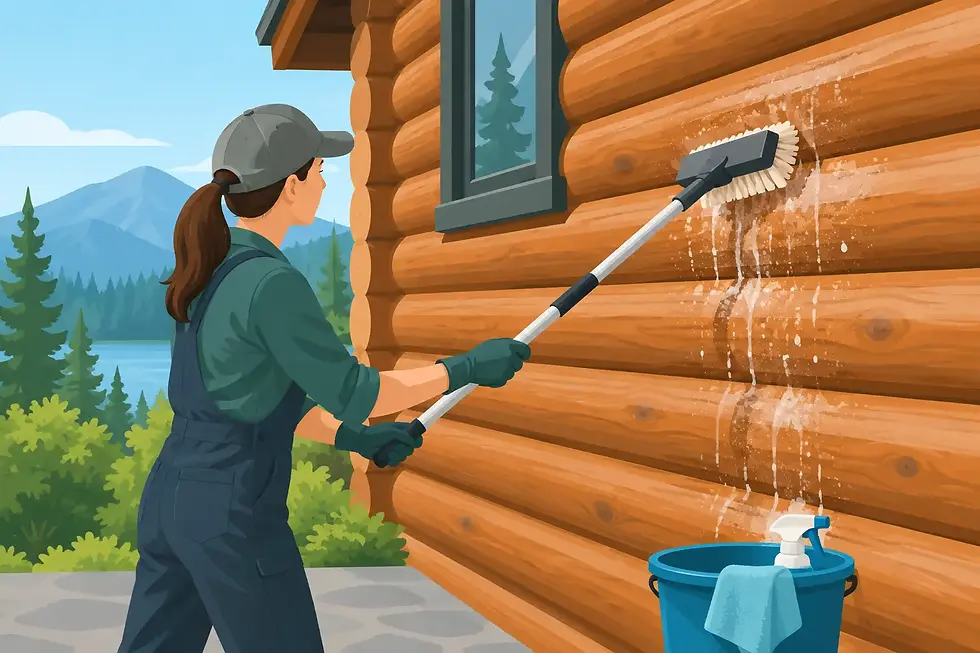
Avoid pressure-washing logs as a routine answer to dirt or discoloration. Excessive pressure can damage wood fibers, force water into joints, and create a rougher surface that holds finish poorly. Likewise, applying stain over loose coating, mildew, or wet wood can trap a problem rather than solve it. Good maintenance starts with correct preparation and a clear understanding of what the wood needs.
When an Inspection Becomes Restoration Work
A yearly inspection should leave you with a prioritized plan, not a vague warning that something needs attention. Some findings can be monitored. Others should be addressed before the next wet season. Failed chinking at a few joints, a worn area of finish, or minor drainage correction may be maintenance work. Soft logs, widespread coating failure, extensive water staining, or deteriorated joints may call for restoration.
When replacement is needed, details matter. A new log should be properly scribed to fit the existing wall, sealed where moisture protection is needed, and finished to blend with surrounding wood as closely as possible. Careful stain matching and clean work practices protect the appearance of the home while the underlying issue is corrected.
Cash Creek Preservations approaches annual inspections as the start of a long-term relationship with the home, not a reason to recommend work that is not needed. A clear assessment helps homeowners decide what to repair now, what to budget for, and what simple habits will reduce future exposure.
Your home does not need to look distressed to benefit from professional attention. Schedule a yearly check while the logs are still doing their job well, and give small concerns the chance to stay small.


Comments